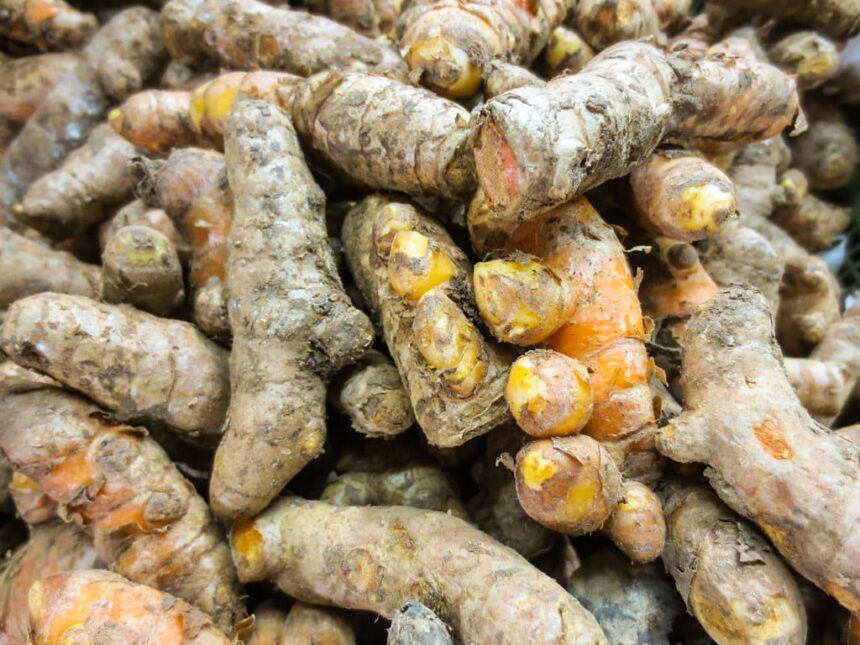

Turmeric (Curcuma longa) is fairly well known these days for its healthful and medicinal properties. It shows up in rice dishes, various health supplements, and is the key to those golden milk recipes.
This superfood rhizome is a tropical plant in the Zingiberaceae family—the same as ginger. Even if you live in a temperate climate, it is still possible for you to grow some turmeric for yourself. It needs a good 10-month growing season, so unless you live in the tropics, you are going to have to give your turmeric a little help in the early days.
Check out how to grow, harvest, and use your own fresh turmeric. All you need is a pot, some soil, and a whole lot of sunshine.
How to Grow Turmeric
Source: Morag Gamble : Our Permaculture Life/YouTube
If you live in a temperate climate, you will have to start your turmeric indoors. Depending on when your first frost date is, will depend on how early you have to start. The idea is that turmeric needs a 9-10 month growing season, and that needs to be done in the warmth.
It is a really good idea to plant turmeric in pots so that you can move it inside and out easily as the temperature changes. It also helps you to move it around the garden to help it get optimal sunlight. As well, if you get summer temperatures above 90°F, you will be able to move it into some dappled shade.
First, you will need to get hold of some turmeric rhizomes. Just like with ginger, you can grow your own turmeric from rhizomes that you buy at the supermarket, or you can order some from an online seed company. Try to buy organic to ensure that there isn’t any growth inhibitor on it.
Choose nice plump rhizomes that have at least 3-4 eyes on them. Unlike with potatoes and ginger roots, you should not chop them into pieces. Just plant the roots with eyes pointing upwards either into individual pots, or a large pot that can accommodate a few plants.
Plant them about an inch to two inches deep and about 4-5 inches apart if you have them in the same pot. Try to use rich soil that has lots of organic matter. Turmeric is a heavy feeder. Keep the soil consistently moist but not waterlogged.
The rhizomes need to be kept warm to germinate, so find a warm place in your house, about 70°F, and keep them there until you see them sprout. Then, you will need to move them to a sunny windowsill where they will get lots of sunlight.
Once you see shoots that are about 3-4 inches high, you can transplant them to larger pots if needed. As outdoor temperatures reach 70°F consistently, you can take your pot or pots outdoors. Again, they will need lots of sunlight unless temperatures soar above 90°F. Then, you will then need to provide a little shade.
Other than that, this is a pretty low-maintenance plant. Just make sure that the soil doesn’t dry out.
How to Harvest Turmeric
Source: The More You Grow/YouTube
In about 9-10 months from planting, you should notice the leaves of your turmeric plants turning dry and brown. This is your cue to start harvesting.
First of all, remove all of the leaves and add them to your compost bin. If possible, carefully empty the contents of your pot into a bigger pot or onto a tarp so that you can work at separating the roots from the soil. Brush away as much of the soil as possible, and once you can see what you are working with, wash the roots with water.
Leave the clump of roots in a cool dry place for a couple of days to dry out. Then, you can break the pieces apart and leave those in a cool dry place to dry out further and for storage.
How to Use Fresh Turmeric
Source: CookingForLife/YouTube
Before you start using fresh turmeric, it should be noted that everything it touches with become yellow. That means, your chopping board, knives, countertops, food, and you!
Just as you would with ginger, you can use the back of a spoon to scrape away the skin of the turmeric. However, unless the skin is very old and papery, you will be just fine to leave the skin on.
Next, you can grate the turmeric root with a fine grater or chop it finely. It all depends on what you are using the turmeric for.
Now you have your fresh turmeric in a manageable state, you can use it in all kinds of dishes to add warmth, color, and an earthy flavor. Use it to make a healthful tea or use it add a golden glow to many different desserts.