Help keep One Green Planet free and independent! Together we can ensure our platform remains a hub for empowering ideas committed to fighting for a sustainable, healthy, and compassionate world. Please support us in keeping our mission strong.
Get ready to get stuffed, because March 20th is National Ravioli Day. Traditionally, ravioli are square, but they can be made in other shapes, such as circles, or semi-circles, which are called mezze lune.
Ravioli are usually filled with cheese, meat, seafood, or vegetables. You can fill them with whatever you like, but ricotta is the most popular cheese filling. You can make dairy-free ricotta by using tofu, like in this Tofu Ricotta Crostini, or cashews, as in these Baked Eggplant Stacks with Cashew Ricotta. Once you’ve picked out your filling, you’ll need a sauce to go with your homemade ravioli and the choices for sauces are practically endless. Top your ravioli with traditional marinara sauce, “meaty” sauces made with chickpeas or lentils and nuts, or a vibrant pesto sauce.
As a kid, you may have eaten ravioli that came in a can, but there’s no need for that anymore. You can buy fresh or frozen ravioli in grocery stores, or specialty food stores. Or, you can make your own! Once you know all the tricks and how-tos, celebrate with these 10 amazing ravioli dishes.
1. Spinach and Soy Ricotta Ravioli with Wild Garlic and Walnut Sauce

This wonderful recipe for Spinach and Soy Ricotta Ravioli with Wild Garlic and Walnut Sauce recreates the famous Italian dish, ravioli ricotta e spinaci. The homemade pasta shells are fresh, springy, and elastic, thanks to rice oil. With every component being made from scratch, this recipe is perfect for evenings with the entire family, where everyone can play a part in making the magic happen. Make this recipe a new family tradition!
2. Squash Ravioli with Kale Pesto and Pine Nuts

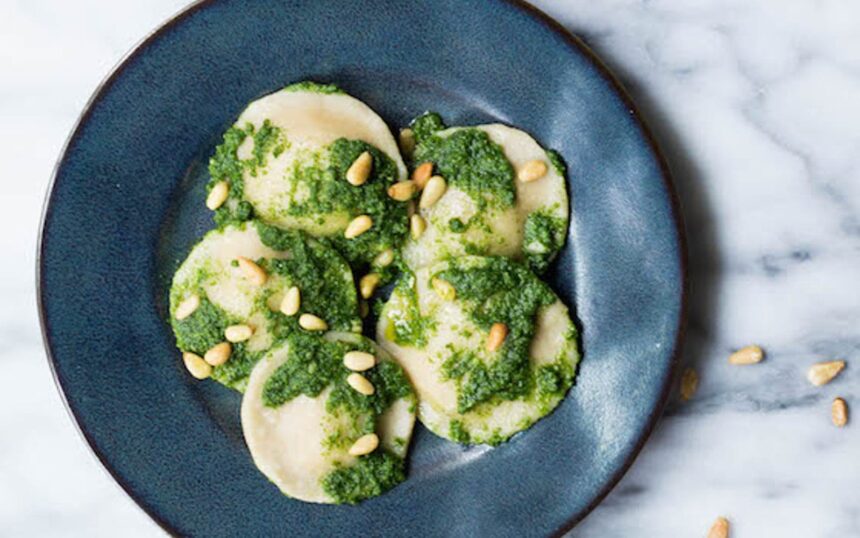
The colors in these Squash Ravioli with Kale Pesto and Pine Nuts are so vibrant! Acorn squash fills these homemade, gluten-free ravioli shells. The ravioli are topped with a verdant pesto sauce made with dark, leafy kale, and pine nuts. Sprinkle with additional pine nuts for a crunchy garnish.
3. Portobello Pumpkin Ravioli with Sage and Walnut Pesto
![Portobello Pumpkin Ravioli With Sage and Walnut Pesto [Vegan]](https://i0.wp.com/www.onegreenplanet.org/wp-content/uploads//2015/11/ravioli.jpg?resize=640%2C403&ssl=1)
Pumpkin and sage is a classic flavor combination that can’t be beat and they come together beautifully in these Portobello Pumpkin Ravioli with Sage and Walnut Pesto. The pumpkin ravioli pasta shells are filled with Portobello mushrooms and topped with a chunky sage and walnut pesto. These ravioli bring the fancy Italian restaurant to your dinner table.
4. Pea Ravioli with Basil Pesto
![Pea Ravioli With Basil Pesto [Vegan]](https://i0.wp.com/www.onegreenplanet.org/wp-content/uploads//2015/09/ravioli-pasqua2.jpg?resize=640%2C436&ssl=1)
These Pea Ravioli with Basil Pesto have pasta shells that are made from semolina wheat flour. Green peas and shallots, with a little vegan bit of parmesan and fresh lemon zest make up the tasty filling. The ravioli are topped with a basil-almond pesto for a delicious meal that’s comforting, but with flavors light enough to be enjoyed in spring.
5. Mushroom Ravioli with Creamy Leek Sauce
![Mushroom Ravioli With Creamy Leek Sauce [Vegan]](https://i0.wp.com/www.onegreenplanet.org/wp-content/uploads//2015/10/ravioli.jpg?resize=640%2C403&ssl=1)
This Mushroom Ravioli with Creamy Leek Sauce is a total Italian grandma recipe. The dough is simple and the filling, even more so. The cashew-based leek sauce is creamy, delicious, and the perfect complement to the meaty mushroom filling. Be sure that everyone has a chance to get second (and third) helpings, like a true grandma would — believe us, they’ll want them.
6. Butternut Squash Ravioli with Sauteed Mushrooms
![Butternut Squash Ravioli With Sautéed Mushrooms [Vegan, Gluten-Free]](https://i0.wp.com/www.onegreenplanet.org/wp-content/uploads//2015/10/Butternut-Squash-Ravioli-with-Saut%C3%A9ed-Mushrooms-Grain-Free-2-1200x752.jpg?resize=640%2C401&ssl=1)
This Butternut Squash Ravioli with Sauteed Mushrooms is a beautiful dish that is totally worth the time and effort you put into it. The butternut squash has a surprisingly similar texture to traditional wheat-based pasta, and the creamy cashew-bean filling is more flavorful than any ravioli filling you’ve ever had. Creating this dish should be enjoyed on a day when you have time to kick back, relax, and enjoy making good food in your kitchen.
7. Beans and Plantain Ravioli

These Bean and Plantain Ravioli are a unique twist on a classic pasta dish. Freshly made pasta is filled with a lightly spiced mixture of beans and plantain, topped with sautéed red pepper, and garlic. Make it fancy by garnishing with fresh herbs and julienned cucumber.
8. Raw Beet Ravioli with Cilantro Cream
![Raw Beet Ravioli With Cilantro Cream [Vegan, Raw, Gluten-Free]](https://i0.wp.com/www.onegreenplanet.org/wp-content/uploads//2015/03/beet1.jpg?resize=640%2C428&ssl=1)
The spring season is upon us, and the warmer weather is cause for celebration! It’s the perfect time to make this Raw Beet Ravioli with Cilantro Cream. It’s colorful, fresh, and light, which is great if you live somewhere where the weather is warm. Fresh cilantro gives the cashew cream filling a zesty flavor that pairs perfectly with the crisp, raw beets.
9. Turnip Ravioli

The fun part of these Turnip Ravioli is that the turnip isn’t in the filling — it actually makes up the shell! This is a very fast, very easy way to make homemade gluten-free ravioli without sacrificing flavor. The turnips are a creative, faster way of making your own noodles and it gives you another dose of fresh vegetables. Did we mention the cashew-spinach cheese filling? This recipe is a must-try!
10. Potatoes and Porcini Mushroom Ravioli

When you crave comfort food, make these Potatoes and Porcini Mushroom Ravioli. The homemade pasta shells are filled with a savory potato and mushroom filling and then topped with a broccoli cream sauce that is rich and velvety. The slight crispness and crunch of the broccoli, paired with the creaminess of the sauce make for quite a dynamic duo.
When you consider all the different ingredients you can use to make the shells, filling, and sauces, the number of ways to make homemade ravioli is endless. Try these recipes and, if you want, don’t be afraid to mix and match the components for unique ravioli dishes.
Learn How to Cook Plant-Based Meals at Home
Reducing your meat intake and eating more plant-based foods is known to help with chronic inflammation, heart health, mental well-being, fitness goals, nutritional needs, allergies, gut health, and more! Dairy consumption also has been linked to many health problems, including acne, hormonal imbalance, cancer, and prostate cancer, and has many side effects.
For those of you interested in eating more plant-based we highly recommend grabbing our favorite plant-based cookbooks and downloading the Food Monster App — with over 20,000 delicious recipes it is the largest plant-based recipe resource to help reduce your environmental footprint, save animals, and get healthy! And, while you are at it, we encourage you to also learn about the environmental and health benefits of a plant-based diet.
Here are some great resources to get you started:
For more Animal, Earth, Life, Vegan Food, Health, and Recipe content published daily, subscribe to the One Green Planet Newsletter! Lastly, being publicly funded gives us a greater chance to continue providing you with high-quality content. Please consider supporting us by donating!


![Roasted Parsnip and Horseradish Dip [Vegan] – One Green Planet](https://top-100-recipes.com/wp-content/uploads/2026/03/Parsnip-Horseradish-Dip-150x150.jpg)